
 Menu
Search
Menu
Search

€24.88
Regular price:
€27.32

€29.76
Regular price:
€33.41
€32.20
Regular price:
€35.85

€65.85
Regular price:
€69.51
€18.78
Regular price:
€22.44
€57.07
Regular price:
€60.73

€45.61
Regular price:
€49.27
€20.73
Regular price:
€23.17
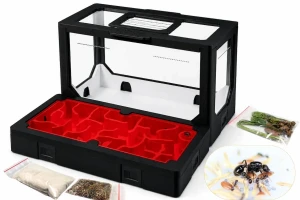
€45.61
Regular price:
€49.27

€25.37
Regular price:
€29.02
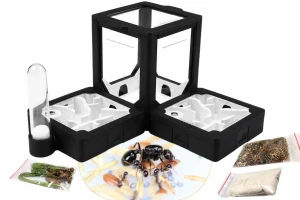
€25.37
Regular price:
€29.02
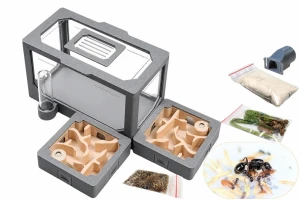
€27.07
Regular price:
€30.73
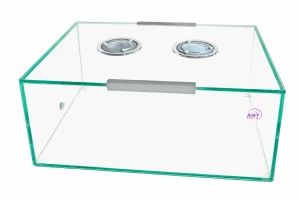


€90.00
Regular price:
€93.66
Producers
Login
Languages


Messor barbarus


Regular price:
product unavailable
add to wish list
4.18417
Description
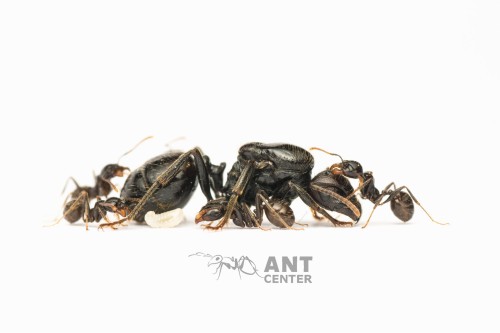
Messor barbarus – Queen with Colony
Messor barbarus, also known as the Harvester Ant, is one of the most popular species among ant keepers due to its impressive size, visible caste system and simple maintenance. In this offer you purchase a fertilized queen with a colony (the number of workers can be selected from the options under the price).
If you're new to ant keeping, start with our guide: Ant Keeping Guide for Beginners
Species Characteristics – Messor barbarus
Species: Messor barbarus (Harvester Ant)
Size: Queen 13–16 mm, workers 3–14 mm (polymorphic caste system)
Coloration: Shiny black–brown
Natural distribution: Southern Europe (Spain, Italy, Greece, Croatia)
Natural diet: seeds and small insects
Captive diet: seed mixes + protein (dead feeder insects)
Read more about their unique seed-based diet: How to Take Care of Harvester Ants
Temperature: 20–28°C (optimal 24–26°C)
Hibernation: recommended but optional
Difficulty level: easy, suitable for beginners
Recommended nests: acrylic, concrete and gypsum formicaria
Why Choose Messor barbarus?
- Clear caste system — different sizes of workers, including impressive majors.
- Eye-catching ants, perfect for observation and educational setups.
- Stable development when kept under basic conditions.
- Seed-based diet — simple and inexpensive to provide.
- Great species for both beginners and advanced keepers.
Not sure which species to choose? See our comparison: Which Ants Should You Choose?
Queen Characteristics
- Originally collected during nuptial flights in Southern Europe.
- Large, 14–16 mm queen — easy to observe in a test tube or nest.
- Monogynous species — one queen per colony.
- Stores a lifetime supply of sperm in her spermatheca during the nuptial flight.
- Raises the first generation of workers alone (claustral founding).
Colony Development – From Egg to Mature Colony
- Egg: 10–15 days – small, white and carefully tended by the queen.
- Larva: 10–20 days – requires protein; rapid growth.
- Pupa: 10–25 days – transformation into an adult ant.
- Imago: newly hatched ant, pale at first, darkening over several hours.
The entire development cycle takes around 30–50 days, depending on temperature and humidity. Mature colonies can grow to thousands of workers with clearly visible worker sizes.
Care Requirements & Feeding
- Temperature: 24–26°C recommended
- Humidity: nest slightly dry or moderately humid
- Diet: seeds (mainly) + protein 1–2 times per week
- Water: constant access to a test-tube or a water dispenser
- Cleaning: remove seed shells and food leftovers regularly
Keeper's Tip
If your colony is still small (e.g. queen + 5–10 workers), keep them in the original test tube for some time. A large formicarium too early may slow down their growth and stress the colony.
FAQ (click to expand)
1. Which colony size should I choose?
Beginners usually start with a small colony (5–10 workers). Larger colonies (20+ workers) develop faster and are recommended for more experienced keepers.
2. Do Messor barbarus require hibernation?
Hibernation around 10–15°C for 2–3 months is beneficial, but not mandatory. Many young colonies are kept warm all year without issues.
3. Which formicarium is best?
Acrylic, concrete or gypsum nests work best — similar to their natural dry, rocky habitats. Cork nests are possible but may be chewed through by the ants.
4. Are Harvester Ants aggressive?
No — they are calm and safe to observe, making them a great species for families and beginners.
5. How often should protein be provided?
1–2 times per week is enough. Seeds should be available regularly but only in small portions to avoid mold.
What's next?
Choose your preferred colony size from the options above, add it to your cart and complete your setup with a suitable formicarium, seed mix and protein food. If you need advice, feel free to contact us — we are happy to help you start your Harvester Ant journey!
Files to download:
Related products
Food for Messors- 150 ml

Mealworm - 20ml

Seeds mixture
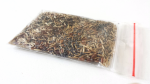
Seeds in a test-tube - Lucerne 10 ml
Seeds in a test tube - Blue phacelia - 10 ml
Seeds in a test tube- Melilotus L. - 10 ml
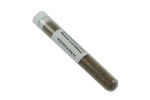
Seeds in a test tube- Persian clover - 10 ml
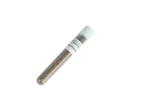
Seeds in a test tube- Red clover - 10 ml
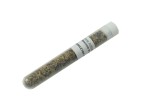
Wood eater insects- capacity 120 ml
