
 Menu
Search

€45.61
Regular price:
€49.27
€20.73
Regular price:
€23.17
€45.61
Regular price:
€49.27

€25.37
Regular price:
€29.02
€25.37
Regular price:
€29.02
€27.07
Regular price:
€30.73
€41.95
Regular price:
€45.61
€59.02
Regular price:
€62.68

€90.00
Regular price:
€93.66
€38.54
Regular price:
€42.20
€40.24
Regular price:
€42.68

€27.80
Regular price:
€30.24

€90.00
Regular price:
€93.66
Producers
Login
Languages


Camponotus barbaricus

Regular price:
product unavailable
add to wish list
4.86
Description
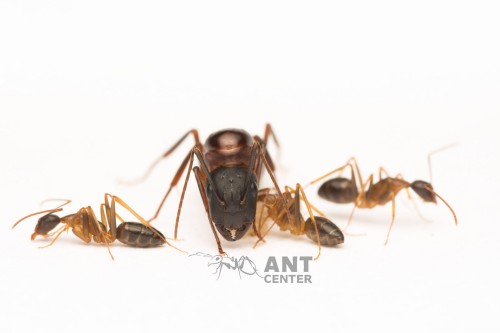
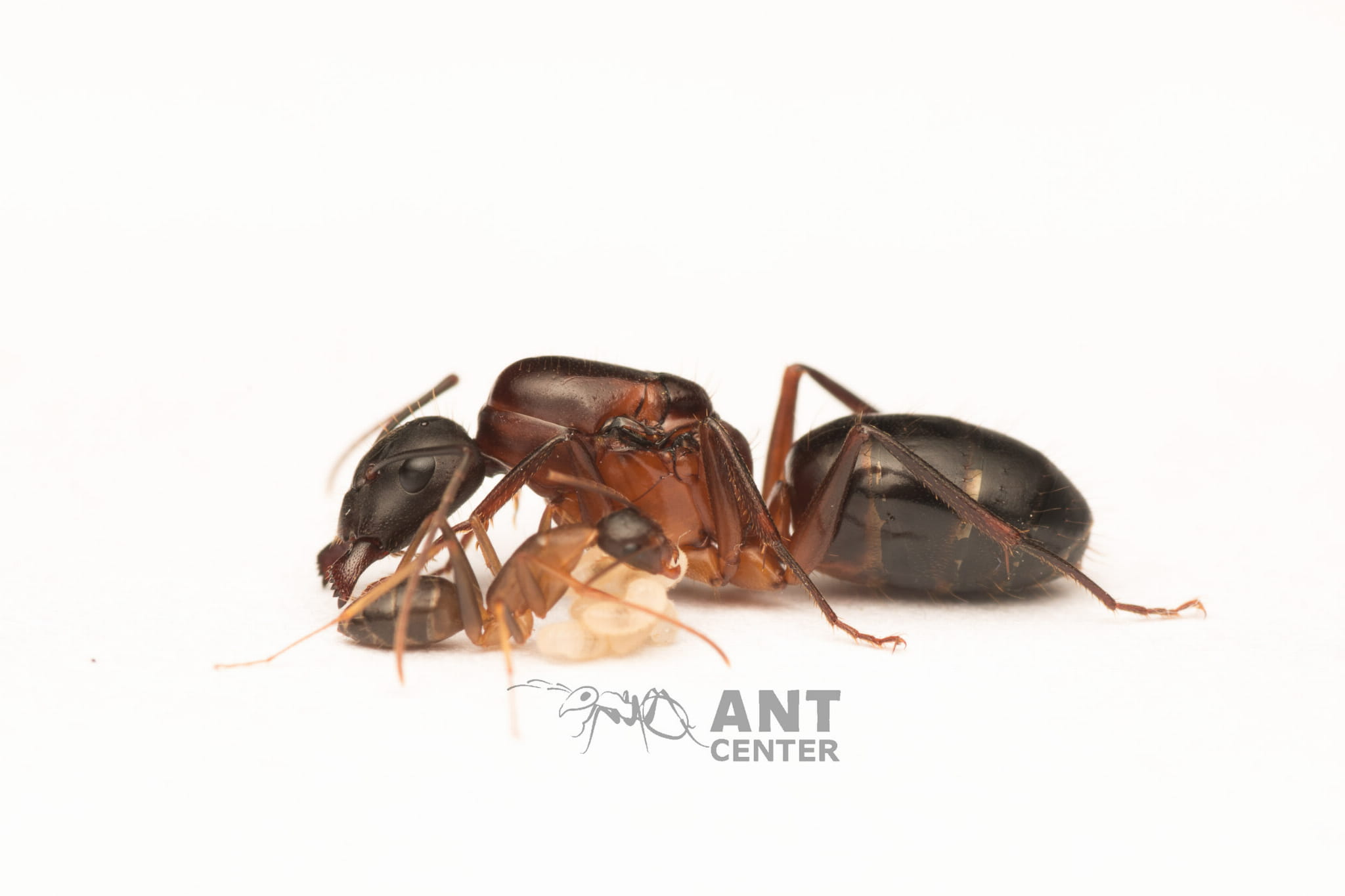
Camponotus barbaricus – a large carpenter ant with distinct worker castes
Camponotus barbaricus is a large ant species from the Mediterranean region. Its colony includes workers of different sizes, from small minors to robust majors and supermajors. As the colony grows, you can observe clear differences in the workers’ appearance and roles.
Species at a glance
Species: Camponotus barbaricus Size: queen approximately 14–16 mm; workers approximately 4–13 mm Colour: black and brown Distribution: the Iberian Peninsula, parts of the Mediterranean coast and North Africa Diet in the wild: honeydew and other sweet secretions, small insects Diet in captivity: a carbohydrate source, such as honey or food for ants, and feeder insects such as mealworms and crickets Hibernation: yes; a mild winter rest Temperature: approximately 20–28°C; a warmer and a cooler area are recommended Difficulty: a demanding species that needs regular care and suitable conditions Nesting: in soil, under stones and wood, in warm, sunny locations Colony structure: minor, media, major and supermajor workers
How does Camponotus barbaricus behave?
This is a large ant species whose colony develops gradually. Workers may be active both during the day and after dark. With calm handling, you can observe their everyday behaviour; avoid disturbing the colony or making sudden changes to the nest.
One of the species’ characteristic features is the clear size variation among its workers. Smaller workers help care for the brood and search for food, while larger majors and supermajors have a more robust build and enlarged heads.
How should you feed Camponotus barbaricus?
The colony needs both carbohydrates and protein. Honey or food formulated for ants can provide carbohydrates. Feeder insects, such as mealworms and crickets, provide protein. Adjust portion sizes to the colony’s population and remove uneaten food.
Which formicarium should you choose?
Choose a formicarium suited to the colony’s current size. Recommended options for this species include the universal Kompakt formicarium, the concrete “Herkules” nest and the “Lubi” formicarium. A formicarium is not included with this offer.
The nest should allow for localised watering. It is also important to provide an outworld and secure connections suited to the colony’s size, along with a reliable escape barrier.
Is Camponotus barbaricus suitable for beginners?
This species is best suited to keepers prepared to provide regular care, warmth and a mild winter rest. It can be an interesting choice if you would like to observe the development of a large colony and the differences between its worker castes.
Important information
Camponotus barbaricus is not native to Poland. Do not release the ants or their offspring into the natural environment. If you can no longer keep the colony, contact AntCenter about transferring it.
Frequently asked questions
Does Camponotus barbaricus need hibernation? Yes. This species has a mild winter rest. The exact conditions should follow the recommendations for the specific colony.
What should you feed Camponotus barbaricus? Provide a carbohydrate source, such as honey or food for ants, as well as protein, for example feeder insects.
Which formicarium should you choose for this species? Recommended options include the universal Kompakt formicarium, the concrete “Herkules” nest and the “Lubi” formicarium. Choose the size according to the colony’s population.
Is Camponotus barbaricus a large ant? Yes. It is a large species, and its workers vary in size, from minors to larger majors and supermajors.
Related products
Cork formicarium Compact II
Modular Cork Nest for Ants – AntLove XS (7 × 4 cm)
Mealworm - 20ml

Set of food for ants

Brown jelly food - candy flavor 16 g

Green jelly food- melon flavored 16 g
