













Fascinating Facts About Exotic and Common Ants
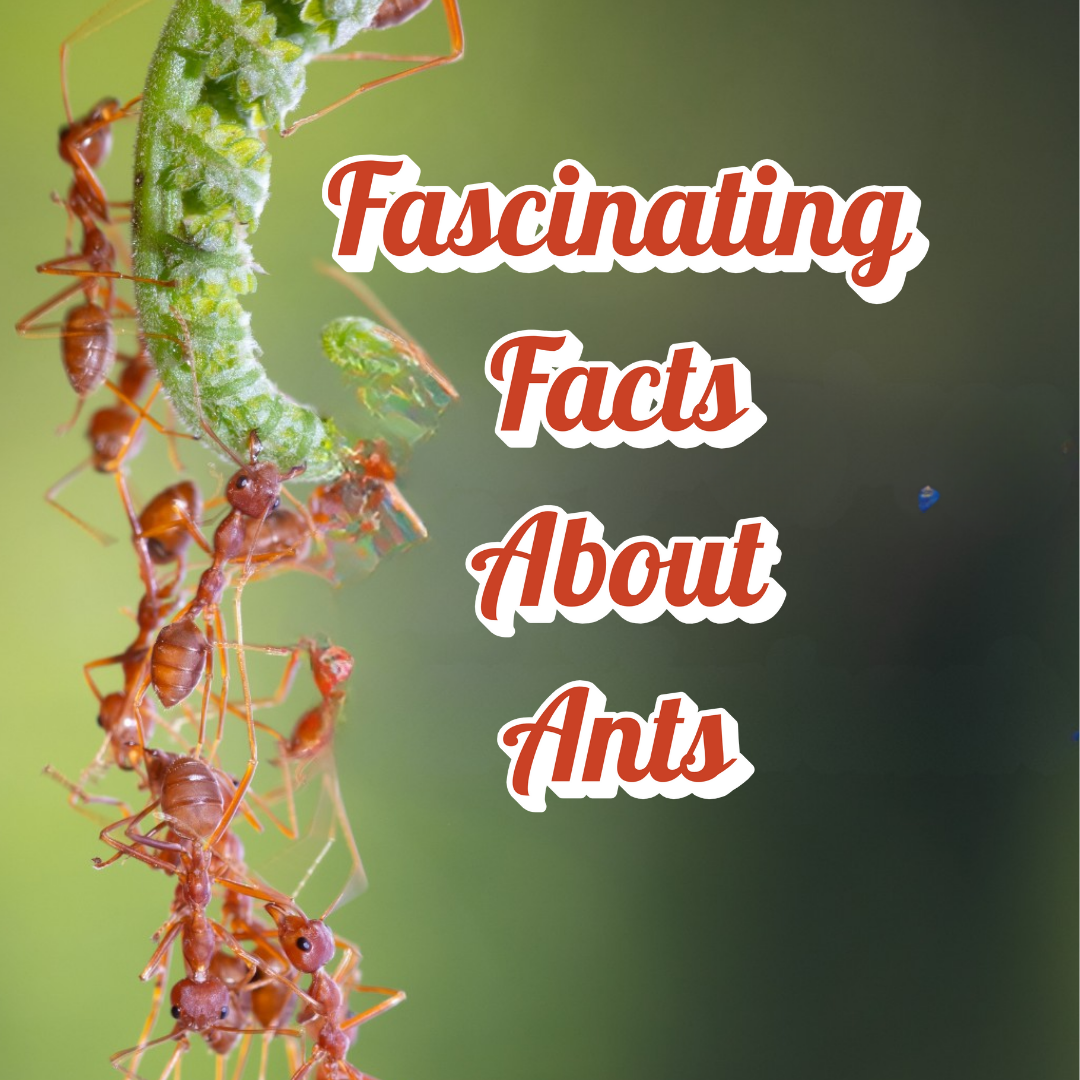
Ants are among the most remarkable creatures on Earth — they can lift objects many times heavier than their own bodies, build gigantic supercolonies, and even cultivate fungi. In this article, you’ll discover 10 fascinating facts about both exotic ants and the species well-known here in Poland.
1. The staggering number of ants on Earth
According to National Geographic, there are about 20 quadrillion ants on our planet — that’s roughly 2.5 million ants for every human being!
You can read more about it here: Ants.
However, invasive (non-native) ants can become a serious problem. Traveling with humans and goods, they alter ecosystems, compete for resources, and often displace native species — sometimes causing economic damage.
One of our customers once told us how his antkeeping journey began completely by accident — when he found a small colony inside the soil of a flower pot imported from abroad!
2. The incredible diversity of ant species
According to Wikipedia, there are 12,000–13,800 identified ant species, and scientists estimate there may be as many as 22,000 worldwide.
3. Supercolonies – underground cities of ants
Some species form supercolonies with millions of individuals, as described by Pestworld.org. Such vast colonies have been discovered in Japan, Australia, the USA, and southern Europe.
While many ants live in small groups within cracks or soil cavities, others build sprawling underground nests inhabited by thousands or even millions.
Here’s a fascinating video explaining the science of underground ant tunnels: The science of underground kingdoms
Below is a table showing some of the largest known supercolonies:
| Species (Latin) | Common Name | Location | Estimated Size | Notable Features |
|---|---|---|---|---|
| Linepithema humile | Argentine ant | Europe, California, Japan | Billions of workers, hundreds of millions of nests | Largest known supercolony; no aggression between nests |
| Monomorium pharaonis | Pharaoh ant | Cosmopolitan | Millions of workers, dozens of queens | Forms satellite nests in buildings; difficult to control |
| Lasius neglectus | Yellow ant | Europe (Hungary, Germany, Spain) | Tens of millions of workers | Highly invasive, displaces native species |
| Solenopsis invicta | Fire ant | USA, China, Australia | Millions of workers | Aggressive, painful stings |
| Pristomyrmex punctatus | — | Japan | Huge colonies without queens | All workers can reproduce; unique social system |
Supercolonies consist of cooperating castes — queens, workers, soldiers, and males — functioning as one massive organism.
4. The incredible strength of ants
Ants can lift objects many times heavier than their own bodies. For instance, Oecophylla smaragdina (weaver ants) can lift objects up to 100 times their body weight! 💪
Watch our video about weaver ants on the AntCenter YouTube channel: Weaver Ant Care
Their strength comes from their anatomy — powerful jaws and muscles anchored to the inner surface of their exoskeleton.
Read more here: Ant mandibles – small but mighty (in polish)
5. Ants can “hear” without ears
Ants don’t have ears — instead, they sense vibrations through special receptors in their legs that pick up signals transmitted through the ground.
Learn more: Vibrational communication performed by two Camponotus species in Borneo
6. Ants breathe through spiracles
They don’t have lungs! Instead, ants breathe through tiny tubes called spiracles, which distribute oxygen throughout the body.
Some species can even survive up to 24 hours without breathing by closing their spiracles.
Scientific article: Why Do Insects Close Their Spiracles?
7. Ants have two stomachs
One is for personal digestion, and the other is for sharing food with other ants through a process called trophallaxis.
Read more about it: Trophallaxis among ants ( in polish)
8. The evolutionary origins of ants
Ants (Formicidae) evolved from wasp-like ancestors (Vespoidea), sharing common lineage with bees and wasps. The oldest known ant fossils date back 100–110 million years (Cretaceous period).
They’re among the earliest social insects, with complex caste structures and cooperative colonies.
Many of our customers are also beekeepers, and they instantly recognize the similarities between bee colonies and ant colonies — both have queens, workers, and males, and both rely on strict social organization. A detailed comparison could fill an entire article!
9. Ants as fungus farmers
Leaf-cutting ants (Atta species) cultivate massive fungal gardens that serve as their primary food source.
Watch this fascinating documentary: Ants: fungus farmers
We’ve also raised fungus-growing ants ourselves! The most challenging part in our region was finding suitable leaves during winter — but it was absolutely worth it.
Check out our videos featuring Acromyrmex coronatus and Acromyrmex octospinosus colonies on the AntCenter channel. 🍃
10. Ants – the architects of the forest
Myrmecochory is the process of seed dispersal by ants.
Plants produce elaiosomes — nutrient-rich appendages that mimic the smell of food. Ants carry these seeds to their nests, eat the elaiosomes, and discard the seeds in safe, nutrient-rich environments where they can germinate. 🌱
Read more here: Myrmecochory – how ants shape plant life
Frequently Asked Questions
How long do ants live?
Queens can live 15–30 years, while workers usually survive a few months to a few years.
How strong are ants?
Depending on the species, they can carry 10–100 times their body weight.
Do ants sleep?
Yes — but differently from humans. Workers take hundreds of micro-naps throughout the day, totaling about 2 hours and 48 minutes of rest daily, while queens can sleep for up to 9 hours, often in synchronized cycles.
How do ants communicate?
They use pheromones and antennae contact to exchange information.
Do ants have a brain?
Absolutely! Tiny but efficient — capable of solving complex problems and navigating their surroundings.
Do all colonies have a queen?
Not always. Some species have a single queen (monogyny), while others have many (polygyny). For instance, Camponotus nicobarensis can form polygynous colonies, whereas Camponotus ligniperda usually has only one queen.
Can ants swim?
Yes, some can! For example, Gigantiops destructor swims at a speed of 16 cm per second.
Why do ants “milk” aphids?
They collect the sweet honeydew that aphids produce — a mutualistic relationship.
Do ants fight each other?
Yes — they wage real wars for territory and can even enslave other ants by stealing pupae from rival nests and raising them as their own workers. A well-known example is Formica sanguinea.
Do ants have good eyesight?
They can see, but most species have relatively poor vision.
From our experience, every species behaves differently — even colonies of the same species can vary greatly. For instance, our Camponotus nicobarensis colonies displayed very active, protein-hungry behavior, while others preferred sweet jelly and were much calmer, even at high temperatures.
We’ll keep updating this article — there’s still so much to discover in the world of antkeeping!
We’ve combined scientific knowledge with our own experience to present these facts in the most engaging way possible.
Start Your Journey with AntCenter
We hope this article inspired you to explore the world of ants!
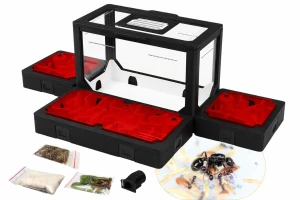
Are you ready for your first colony? Choose a starter set from AntCenter and begin your antkeeping adventure with confidence — no stress, no mistakes, just pure fascination! 🌿✨
Discover your passion for raising ants today!
Author: Piotr Rachwał
About the author: Enthusiast of the insect world, creator of the AntCenter brand, and one of the leading promoters of antkeeping in Poland. For years he has been designing and testing optimal formicarium systems, supporting beginner antkeepers, and sharing his passion for nature. Privately, he’s a traveler, forest lover, and fan of black coffee.
Find more tips on our AntCenter Blog or visit our YouTube Channel.