

 Menu
Search
Menu
Search

€29.02
Regular price:
€31.46

€88.78
Regular price:
€93.66
€4.15
Regular price:
€4.39
€30.98
Regular price:
€35.85
€17.56
Regular price:
€22.44

€44.39
Regular price:
€49.27
€44.39
Regular price:
€49.27

€24.15
Regular price:
€29.02
€24.15
Regular price:
€29.02
€25.85
Regular price:
€30.73
€40.73
Regular price:
€45.61
€57.80
Regular price:
€62.68

€88.78
Regular price:
€93.66
Login
Languages

 Browsing options
Price
-
from
to
Ants Without Winter Diapause
Ants without winter diapause are species that do not require a controlled period of cold overwintering. Their colonies can be kept under suitable, stable conditions throughout the year without being transferred to a refrigerator, cellar or another cold location.
This category is a practical choice for ant keepers who cannot provide safe overwintering conditions or would prefer to avoid the risks associated with cooling a colony. Always check the individual species description, as temperature, humidity, feeding and seasonal activity may still differ considerably between species.
Messor barbarus
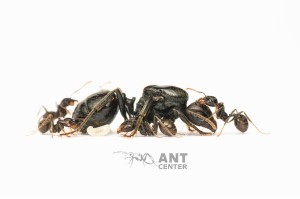
Messor barbarus – Harvester Ant queen with colony.
A popular beginner-friendly species known for its seed-based diet, visible caste system and impressive major workers. Perfect for observation and stable growth even in simple setups. Each order includes a fertilized queen with a selected number of workers.
Availability: duża ilość
Dispatched within: 48 godzin
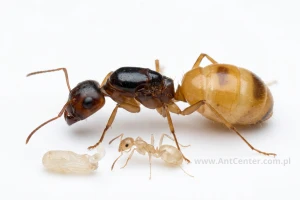
Camponotus nicobarensis
Camponotus nicobarensis is one of the most popular tropical ant species for home ant keeping. Large, active and highly impressive — a perfect choice for intermediate keepers looking to develop a thriving colony in a formicarium.
Availability: duża ilość
Dispatched within: 48 godzin
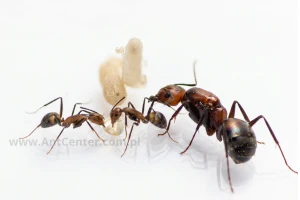
Crematogaster scutellaris
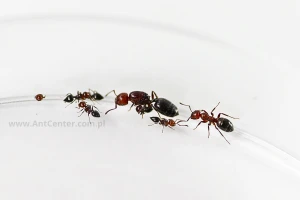
Crematogaster scutellaris is a fast, active Mediterranean ant colony known for its raised “heart-shaped” gaster and striking black-and-red coloration. Best kept in a well-ventilated setup with low to moderate humidity and steady access to sugars. A great choice for observation-focused ant keeping.
Availability: brak towaru
Opisthopsis rufithorax – Strobe Ant Queen with Colony
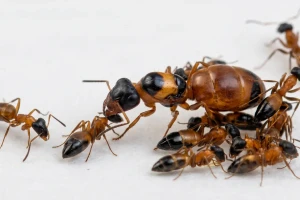
Rare Australian Strobe Ant colony with a queen and approximately 10 workers. Exceptionally fast, alert ants with striking black and rust-orange colouration, recommended for keepers with some previous experience.
Availability: na wyczerpaniu
Dispatched within: 48 godzin
Why Do Some Ant Species Not Require Winter Diapause?
Many ant species from temperate climates undergo a winter diapause associated with lower temperatures and seasonal changes in their natural environment. Species originating from warmer regions generally do not require the same controlled period of cold overwintering.
In ant keeping, this means that the colony does not need to be transferred to a refrigerator, cellar or another cold location. The keeper must still provide conditions appropriate for the particular species throughout the year.
The absence of cold diapause should not be confused with guaranteed continuous growth. Some colonies may naturally reduce their activity, food intake or brood development for a period of time, even when they are maintained at stable indoor temperatures.
Who Are Ants Without Winter Diapause Suitable For?
Species in this category may be a good choice for:
- keepers who cannot provide a safe location for cold overwintering,
- people who prefer to maintain their colonies under stable indoor conditions,
- beginners concerned about making mistakes during controlled diapause,
- experienced keepers looking for tropical, subtropical or Australian species,
- anyone who wants to avoid moving a colony into a refrigerator or cold room.
However, the absence of winter diapause does not automatically make a species suitable for beginners. Some ants in this category may require high temperatures, precise humidity control, specialised feeding, excellent ventilation or particularly effective escape prevention.
Are All Ants Without Winter Diapause Easy to Keep?
No. Winter diapause is only one aspect of ant care. A species that does not require cold overwintering may still be demanding because of its speed, colony growth rate, sensitivity to environmental conditions or nesting requirements.
For example, some tropical species need stable warmth throughout the year, while highly active Australian ants may require especially careful handling and reliable escape protection. Always assess the complete care requirements rather than choosing a colony solely because it does not require winter diapause.
How Should You Maintain Suitable Conditions Throughout the Year?
Stable conditions are particularly important when a colony remains active for most of the year. Temperature and humidity should be monitored regularly and adjusted to the requirements of the selected species.
Pay particular attention to:
- the recommended temperature range for the species,
- appropriate nest moisture and outworld ventilation,
- regular access to carbohydrates and protein,
- a constant source of clean water,
- safe and controlled heating where required,
- changes in worker activity and brood development,
- the colony’s increasing space requirements.
A heat mat or heating cable may be helpful for warmth-loving species, but the entire nest should not usually be heated evenly. Leaving a temperature gradient allows the ants to choose the conditions they currently need. Any heating equipment should be monitored carefully to avoid overheating or excessive drying of the nest.
Which Ant Colonies Without Winter Diapause Can You Choose?
The AntCenter selection may include species from Asia, Africa, Australia and warmer parts of Europe. Availability changes as colonies develop and new species are introduced.
Among the particularly unusual choices is Opisthopsis rufithorax – Strobe Ant Queen with Colony. This Australian species does not require conventional cold diapause, but its exceptionally fast workers make it more suitable for keepers with previous ant-keeping experience.
Before ordering, open the complete product description and check the recommended temperature, humidity, diet, colony size, experience level and setup. Species displayed in the same category may have very different requirements.
Frequently Asked Questions About Ants Without Winter Diapause
Do all ant species require winter diapause?
No. Many species originating from warmer regions do not require a controlled period of cold overwintering and can be kept under suitable indoor conditions throughout the year.
Will the absence of winter diapause harm the colony?
No, provided that the selected species does not naturally require cold diapause. The colony should still be maintained within the temperature and humidity range appropriate for that particular species.
Are ants without winter diapause suitable for beginners?
Some are, but not all. Avoiding controlled overwintering simplifies one aspect of care, but certain species may still require precise environmental conditions, specialised feeding or advanced escape prevention.
Will the colony develop continuously throughout the year?
Not necessarily. Even without cold diapause, some colonies may undergo a natural period of reduced activity, lower food intake or slower brood development.
Do all ants without winter diapause require heating?
No. Heating requirements depend on the species and the temperature inside the room. Warmth-loving ants may benefit from controlled heating, while others can be maintained safely at suitable room temperatures.
How can I maintain suitable conditions throughout the year?
Monitor temperature and humidity, provide suitable food and clean water, and observe changes in worker activity and brood development. Heating equipment should always be controlled to prevent overheating or excessive drying.
What Should You Do Next?
Compare the available colonies and read the complete care information for each species. The absence of winter diapause is helpful, but it should not be the only factor influencing your decision.
Choose a species whose temperature, humidity, feeding, setup and experience requirements you can meet throughout the year. If you are uncertain, contact AntCenter before ordering—we will help you select a suitable colony.